Why AI Is No Longer Optional in Digital Marketing: A Complete Guide for Modern Businesses
Introduction: Digital Marketing Has Reached a Turning Point
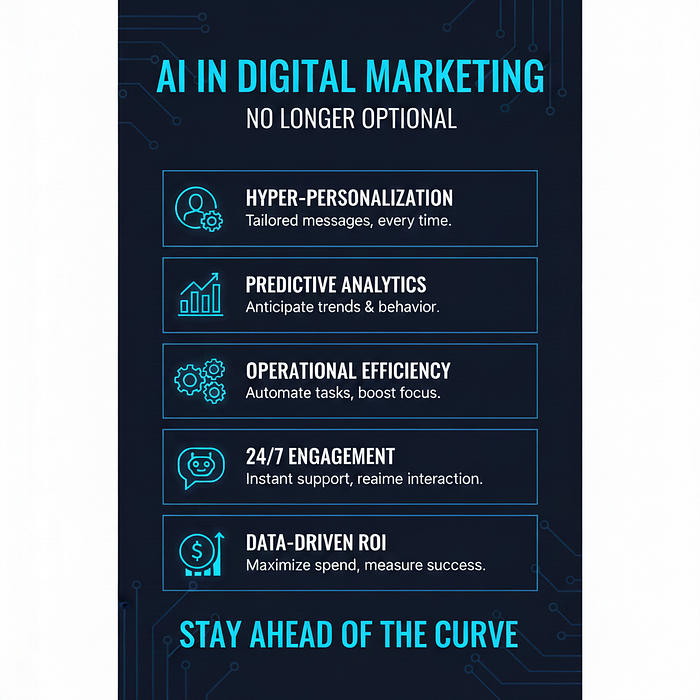
Digital marketing is no longer driven solely by creativity, intuition, or manual execution. The landscape has fundamentally changed. Today’s consumers expect instant responses, hyper-personalized experiences, and consistent engagement across every digital touchpoint. Meeting these expectations at scale is impossible without artificial intelligence.
AI has moved from being an experimental technology to a core operational necessity. Businesses that once viewed AI as optional are now realizing that without it, they struggle to compete, adapt, and grow. In modern digital marketing, AI is not replacing human intelligence — it is amplifying it.
This article explores why AI is no longer optional in digital marketing, how it impacts every major channel, and why forward-thinking marketers are making AI central to their strategies.
Understanding AI in Digital Marketing
Artificial intelligence in digital marketing refers to the use of advanced algorithms, machine learning models, and data analytics to automate, optimize, and personalize marketing efforts. AI systems analyze massive amounts of customer data to identify patterns, predict outcomes, and make real-time decisions that improve marketing performance.
Unlike traditional automation tools, AI evolves continuously. It learns from user behavior, campaign performance, and market trends, becoming more accurate and effective over time.
The Evolution From Manual Marketing to Intelligent Marketing
Traditional digital marketing relied heavily on:
- Static customer personas
- Manual A/B testing
- Post-campaign performance analysis
- Human-driven optimization
While effective in the past, these methods are too slow for today’s digital environment. AI-driven marketing enables:
- Real-time optimization
- Predictive targeting
- Automated decision-making
- Continuous performance improvement
This shift marks the transition from reactive marketing to proactive, intelligent marketing.
Why AI Is No Longer Optional in Digital Marketing
Data Has Outgrown Human Capacity
Every click, scroll, search, and purchase generates data. Businesses now collect more data in a day than they once did in years. Human teams cannot process this volume effectively.
AI analyzes millions of data points instantly, uncovering insights such as:
- Customer intent signals
- Buying patterns
- Engagement trends
- Conversion probabilities
Without AI, businesses are overwhelmed by data rather than empowered by it.
Customer Expectations Demand Personalization
Generic messaging no longer works. Modern consumers expect brands to understand their needs, preferences, and behaviors.
AI enables deep personalization by:
- Delivering tailored content in real time
- Customizing email subject lines and messaging
- Recommending products based on behavior
- Adjusting experiences dynamically
Brands that fail to personalize risk losing customer trust and loyalty.
Speed and Agility Define Success
Markets change rapidly. Campaigns that take weeks to optimize often miss their opportunity.
AI enables marketers to:
- Launch and optimize campaigns instantly
- Adapt messaging based on live performance
- Predict trends before they peak
- Respond to customer behavior in real time
Speed is no longer an advantage — it’s a requirement.
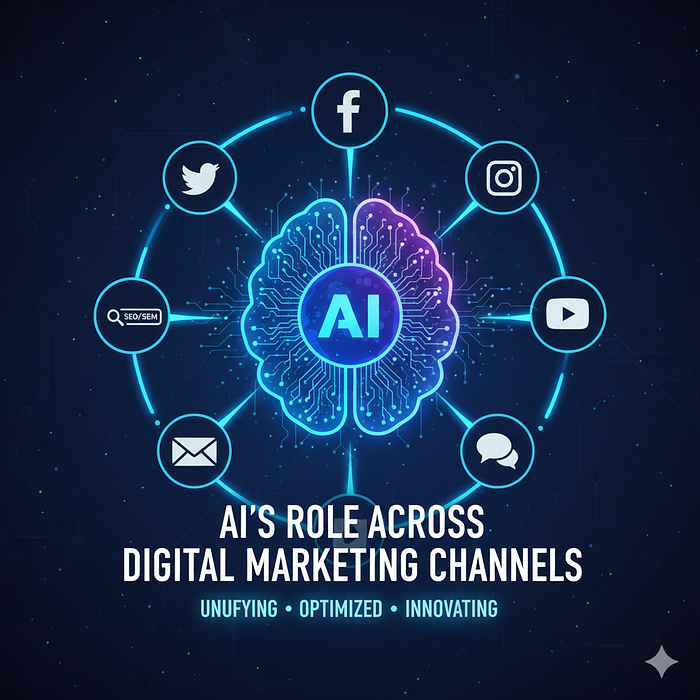
AI’s Role Across Digital Marketing Channels
AI in Search Engine Optimization (SEO)
Search engines themselves are powered by AI, making AI-driven SEO essential. AI helps marketers:
- Identify high-intent keywords
- Optimize content for user intent
- Improve readability and engagement
- Forecast ranking potential
By aligning content with search engine algorithms and user behavior, AI improves both visibility and relevance.
AI in Content Marketing
AI assists in:
- Topic discovery based on audience interest
- Content structure optimization
- Performance prediction
- Repurposing content across platforms
Rather than replacing writers, AI helps create content that resonates more effectively with target audiences.
AI in Paid Advertising
Paid media platforms increasingly rely on AI algorithms. AI optimizes:
- Bidding strategies
- Audience targeting
- Ad placements
- Creative performance
This reduces wasted spend while improving return on investment.
AI in Social Media Marketing
AI-powered tools analyze:
- Engagement patterns
- Optimal posting times
- Trending topics
- Audience sentiment
This allows brands to maintain consistent, relevant, and timely communication.
AI in Email Marketing
Email marketing becomes significantly more effective with AI through:
- Predictive send times
- Behavior-based triggers
- Personalized messaging
- Automated follow-ups
AI-driven email campaigns consistently outperform traditional methods.
Thought Leadership Insight: Why Experts Advocate AI Adoption
Industry leaders increasingly stress that AI is not about automation alone — it’s about strategic intelligence.
Nate Patel, known for his insights into AI-driven transformation, often emphasizes that organizations using AI effectively are those that embed it into decision-making processes rather than treating it as a standalone tool. His perspective highlights how AI empowers marketing teams to focus on creativity, innovation, and strategy while data-driven systems handle complexity and scale.
This approach reflects a broader shift in digital marketing: AI is becoming a strategic partner, not just a technical solution.
Read More: Why AI Is No Longer Optional in Digital Marketing: A Complete Guide for Modern Businesses


Comments
Post a Comment